
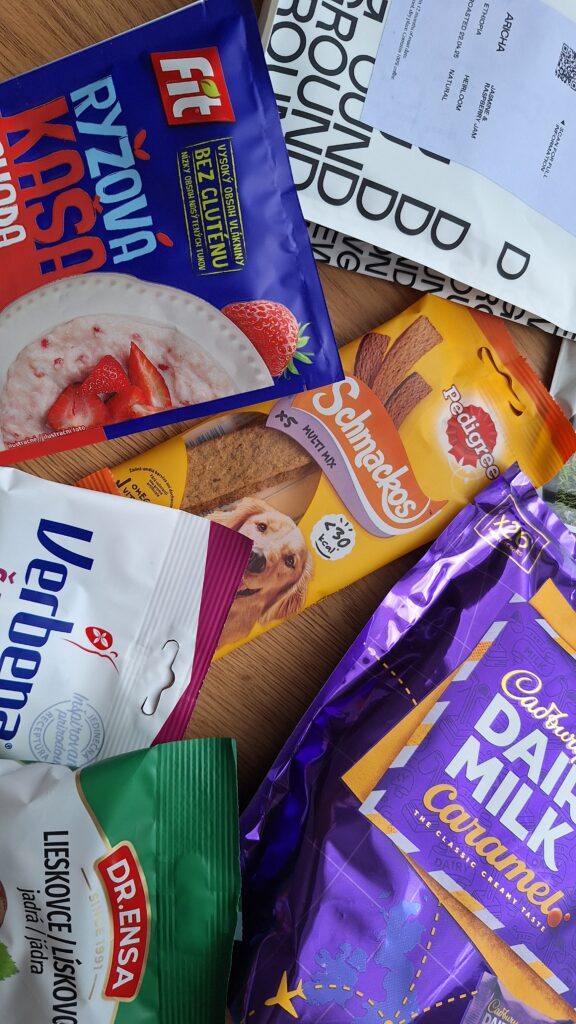
Flexi packaging: food packaging stands on the right adhesives
Flexible packaging has become a standard in the food industry and beyond. Consumers choose them for their lightness, practicality and attractive design. Manufacturers value them for efficient production, lower material consumption and wider recycling options.
Behind this “packaging miracle” there is an inconspicuous but key element – the adhesives and varnishes that hold the individual layers together.
What is flexi packaging?
Flexi packaging is a modern packaging method that uses thin layers of plastic, paper or aluminium foil. Instead of glass or metal, it provides lightweight and flexible packaging that can reliably protect the product.
 In practice, we encounter it every day:
- crisp and snack wrappers,
- chocolates and sweets,
- baby pouches and ready meals,
- dairy products (yoghurt lids, cheese),
- coffee and beverage bags.
Why are they so popular?
- saves material and transport costs,
- protect food from spoilage,
- allow practical opening or re-closing,
- are part of the trend towards eco-friendly solutions.
Main challenges for flexible packaging manufacturers
Although they seem obvious at first glance, there are three major challenges in producing this packaging:
- Food safety: regulations limit substances such as PAHs and VOCs. Adhesives must be certified for food contact.
- Sustainability: pressure to reduce carbon footprint is forcing manufacturers to switch to solvent-free adhesives and recyclable structures.
Production efficiency: high-speed lines require stable adhesions with long pot-life, minimal bubble formation and fast drying.
Why is there an appeal for the use of solvent-free adhesives?
Ecological reasons
Solvent-based adhesives release VOCs during processing. These contribute to smog formation and worsen air quality. The burning of solvents in manufacturing processes means higher CO₂ emissions, i.e. a larger carbon footprint. From a recycling point of view, it is a problem if packaging combines several incompatible materials (e.g. plastic + aluminium).
Such packaging is difficult to recover → pressure for mono-material and recyclable structures is increasing.
Legislative reasons
The European Union is adopting increasingly stringent targets for the Green Deal and the circular economy:
- By 2030, all plastic packaging in the EU must be recyclable or reusable.
- VOC emission limits are defined by directives (e.g. VOC Directive 1999/13/EC).
Packaging manufacturers are under pressure from both retail chains and brands to have packaging with a lower carbon footprint and are communicating this as part of ESG strategies.
Business reasons
Switching to solvent-free adhesives means lower costs for energy-intensive solvent combustion. Recyclable materials increase the attractiveness of the manufacturer for brands that want “greener” packaging. Better sustainability = competitive advantage, especially in the European Union market.
In practice, we know several flexi packaging solutions
Flexible packaging is not made universally for all products. Each segment has its specifics, for example:
Snack packaging
Fast lamination and high durability, no bubbles or solvent residues.
Children’s pouches
Safe and flexible adhesives that can withstand handling and heat treatment or pasteurization.
Yoghurt lids
Special heat seal varnishes that guarantee a reliable seal even at low temperatures that will not damage the yoghurt or its cultures.
Each of these applications requires a different suitable type of adhesive, although they may share common characteristics, for example in terms of sustainability.
Trends in flexi packaging
Development is moving forward quickly – and so are the requirements for adhesives.
- Solutions without organic solvents: eliminate VOC emissions and contribute to greener production.
- Smart packaging: packaging equipped with QR codes or other elements where print and varnish durability is important.
- Recyclable materials: pressure from EU legislation towards packaging that is easier to recover and reuse.
How we help companies with flexi packaging
AGGLU is in contact with leading manufacturers of a wide range of adhesives, including solvent-free variants suitable for the production of flexible packaging in the food industry. But packaging manufacturers need more than just a few pallets of industrial adhesive. Therefore:
- Thanks to our expertise, we can advise on the selection of the appropriate adhesive, as we have most likely already encountered a need in the segment,
- we can help with the set-up and calibration of lines and gluing systems, because we know the correct values for the effective application of the adhesives we supply,
- we provide testing and technical support so that the adhesive supply can go straight into live production without unnecessary downtime.
In other words, we combine certified products from world-renowned manufacturers with locally available expertise and service.
Flexible packaging is the future of the food industry. But only if they stand on a solid foundation – quality and well-chosen adhesives with properly calibrated systems.
At AGGLU, we are ready to help you if you are looking to incorporate flexible packaging into your packaging strategy. Just get in touch.